Brix under control: how inline refractometers cut waste and rinse water in beverage production
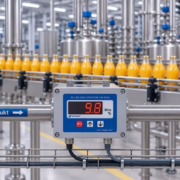
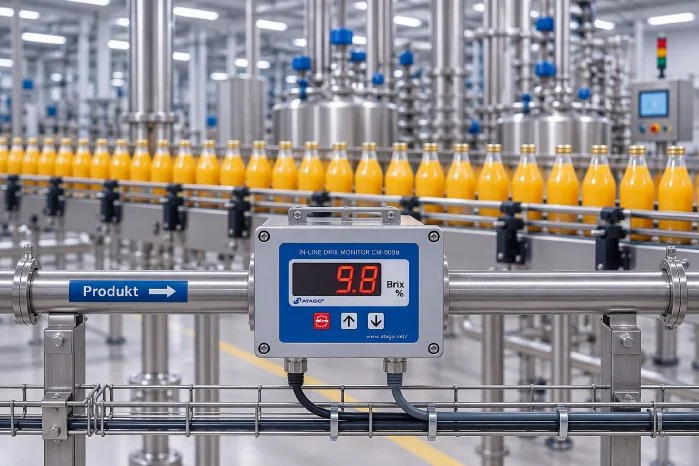
Every sip should taste like the one before. At the same time, every filling line runs under cost pressure. Inline refractometers from ATAGO, integrated by GIMAT, measure Brix and concentration directly in the pipe instead of sending samples to the lab.
Fruit juice, energy drinks, flavoured water or a syrup for food service: modern recipes no longer tolerate deviation. Sweetness shapes the taste, and taste shapes brand loyalty. Most soft drinks sit at around 10 grams of total sugar per 100 millilitres, fruit sugar and added sugar combined. That is the figure quality assurance watches, and in the lab it can only be checked by sampling. Between two samples sit hundreds of litres that have long been bottled.
Blending: holding the recipe when the fruit varies
The moment raw material and water meet in the mixing plant, a look into the pipe pays off. If the Brix value drifts from target, volumes can be corrected while the batch is still in the tank. With juice this is the decisive point: a refractometer captures total sugar content regardless of where it comes from. Apples from different orchards and ripeness stages bring different sweetness. That natural spread can be balanced through sugar addition until the target of, say, 10 % Brix is reached. Without that control a second error tends to slip through: if sugar drops while acid dosing continues unchanged, the taste turns sour. The customer notices, the lab often only at the next sample.
Product changes: the border between two products
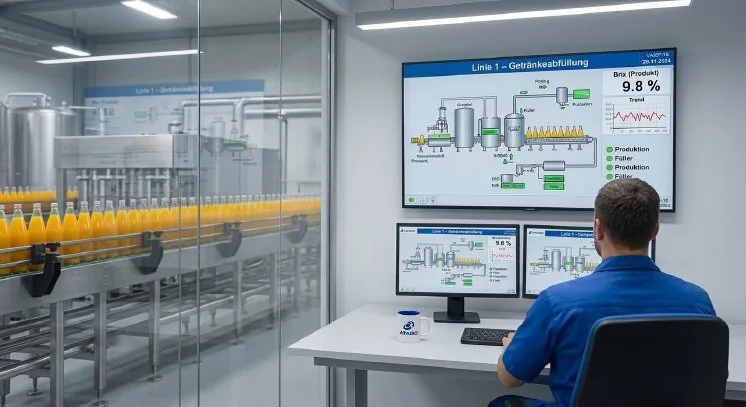
More varieties and more flavours mean more product changes per shift on modern filling lines. Before bottling and when switching between two batches, the refractometer acts as a guard in the piping system. It detects within seconds where the new batch has replaced the old one. Mix-ups drop out, and far less product is lost at the interface. With expensive concentrates and small batches, that pays back quickly.
CIP: when the line is really clean
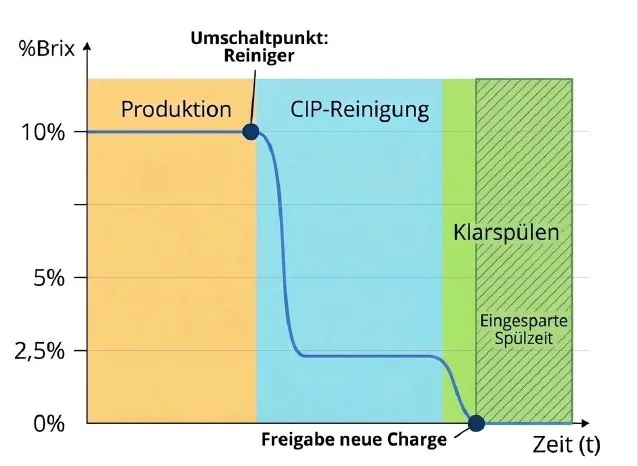
After production comes cleaning, and that is often where the largest savings sit. During cleaning in place, the same sensor monitors the concentration of caustic soda or acid cleaner. Underdosing endangers hygiene, overdosing costs chemicals and wastewater load. The final rinse is where it gets interesting. A cleaning solution typically reads around 1.5 to 2.5 % Brix, pure drinking water reads 0.0 % Brix. Lines without sensors rinse far longer than necessary for safety reasons. Once the refractometer reports 0.0 % Brix, the line is verifiably free and the next batch can start. That saves drinking water, energy and wastewater volume, and it lowers the COD load that municipal treatment plants bill for.
Why optics measure more robustly than density here
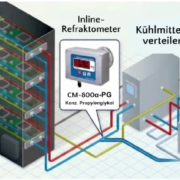
Density methods reach their limits with pulp, turbidity and micro air bubbles, because these distort the reading. The ATAGO process refractometers work optically on a sapphire prism and remain unaffected. Automatic temperature compensation (ATC) balances fluctuating process temperatures, up to hot filling and CIP conditions. The compact CM-Base covers straightforward tasks, while the high-resolution CM-800α comes in when space is tight.
From the sensor to the PLC
Sensors only deliver value once they reach the control system. GIMAT is an ATAGO distributor and service centre and works as a system integrator: selecting the right device, designing the measuring point, integrating it into the PLC, logging measurement and cleaning values. For quality managers the last point matters most. Complete batch documentation makes evidence for IFS Food or HACCP audits considerably easier, because the values come from the plant itself rather than from handwritten lists.
What production managers should check first
Three questions usually clarify the need: how often does the product change, how much product is lost at the interfaces, and how long does the line rinse after cleaning? Where one of these answers is uncomfortable, measuring is worth it. Details on the devices are on the product pages for the CM-800 α process refractometer and the CM-BASE α. For help choosing the right measuring point, the application engineers advise without obligation, by phone or on site: info@gimat.de.