Nitrous oxide from wastewater plants: the biology in the tank decides the climate balance
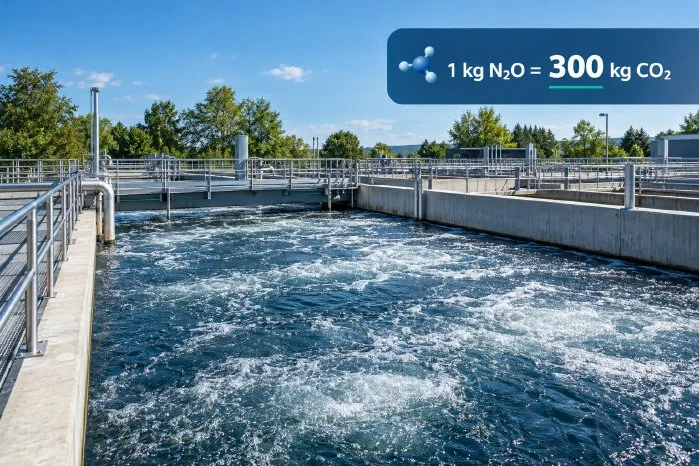
Nitrous oxide is around 300 times more potent than CO2. It forms inside wastewater plants during normal operation, and nobody sees it. The SENTRY biofilm sensor from GIMAT makes the biology in the tank visible before emissions occur.
When a wastewater treatment plant is judged on its climate footprint, most people look at the electricity bill for aeration. The bigger problem often sits invisibly above the tank. Nitrous oxide (N2O) forms during nitrogen removal as an intermediate and escapes into the atmosphere as soon as the reaction chain in the biology breaks down. For municipalities that have to report their climate balance, this is an item that appears in no energy audit.
Why the biology loses its rhythm
Nitrous oxide is a normal part of nitrogen conversion. Nitrification and denitrification produce it as an intermediate stage, and under stable conditions it is processed further. It becomes critical when the process stalls. Two triggers show up in practice again and again: sudden load peaks in the influent and a shortage of easily degradable carbon, measured as BOD or readily biodegradable COD. When the denitrifying bacteria run out of energy, the chain breaks and the greenhouse gas leaves through the surface. The effluent value can still look fine at that moment. That is what makes the situation deceptive.
Off-gas measurement shows the result, not the cause
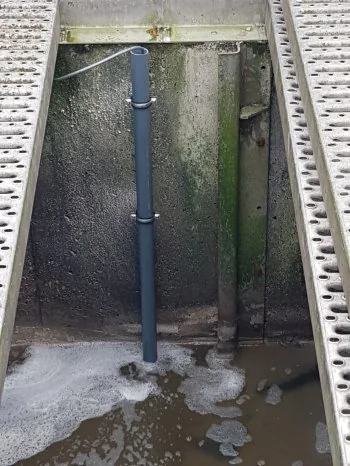
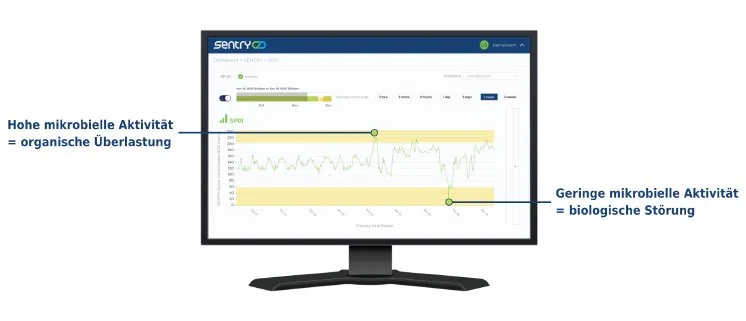
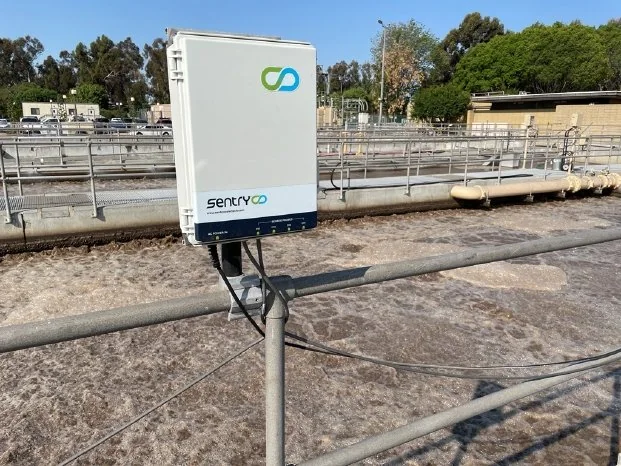
Many operators have invested in gas measurement in the exhaust air over the past years. Dr. Volker Koschay, managing director of GIMAT, considers that the second step before the first: such systems are expensive, maintenance-intensive and only reveal the problem once it already exists. The SENTRY probe works in the liquid phase instead. It delivers a signal every minute on how actively the microorganisms in the tank are working. With that information, aeration and carbon dosing can be adjusted before the biology tips over.
A natural biofilm does the measuring
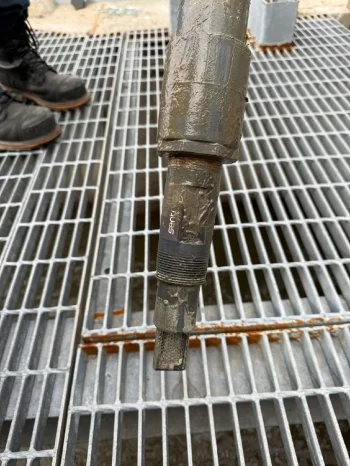
The principle needs no chemicals. Microorganisms in the wastewater settle as a biofilm on the sensor surface, exactly as they would on any other material in the tank. Degrading organic matter produces a tiny electrical current. That current is proportional to the organic load and therefore a direct measure of biological activity. No reagents are required, and neither are optical lenses or fixed cleaning intervals. Maintenance stays low and operation stays stable.
What operators control with it
Three things follow from the signal that matter in daily work:
- If the denitrifiers lack carbon, the probe shows it immediately. Dosing can be corrected before nitrogen leaves as nitrous oxide instead of harmless N2.
- During load peaks, aeration in the tanks runs feed-forward instead of reacting after the fact.
- The system keeps running without regular cleaning cycles and without consumables.
Who is behind the technology
The system was developed by SENTRY Water Monitoring, based in Canada. The company belongs to the US group USALCO, which works in water chemistry and the digitalisation of water processes. GIMAT Liquid Monitoring in Polling distributes the sensors as exclusive representative for the German-speaking market. For operators that means one local contact who knows the application from wastewater practice.
Bringing climate balance and effluent values together
The EU has tightened requirements for wastewater plants for years, and at the same time municipalities and associations ask for reliable climate figures. Real-time process stabilisation serves both. It protects effluent values because the biology no longer runs at the edge. And it lowers the CO2 footprint because the nitrous oxide never forms. Operators who also run aeration on demand save electricity on top.
Start with a pilot, then decide
Technical data and field examples for the SENTRY BOD and toxicity sensor are available on the GIMAT product page. Anyone who wants to test the sensor at their own plant gets support with planning a pilot project by e-mail at info@gimat.de or by phone on +49 881 628-0. The best starting point is a plant that regularly struggles with load peaks. That is where the benefit shows fastest.