In metal-cutting operations, cooling lubricants play a crucial role.

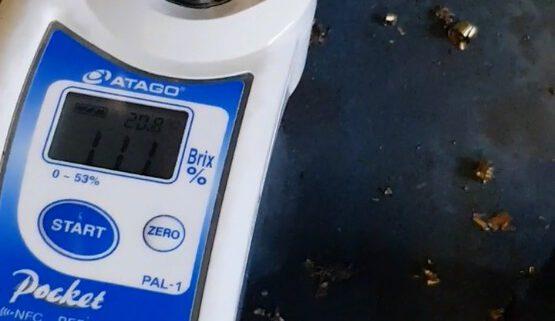
While oil emulsions have traditionally been used, oil-free aqueous solutions, often based on glycol, are increasingly being employed. To ensure the optimal ratio of glycol to water, continuous concentration measurement is essential. A proven parameter for this is the Brix value, which can be quickly and easily determined using refractometers such as the digital handheld PAL-1 from ATAGO.

The video demonstrates how a sample is taken from the machine tool’s supply tank using a pipette and the Brix value is determined with the PAL-1 within a few seconds.

ATAGO, headquartered in Japan, is one of the world’s leading manufacturers of refractometers. In Germany, GIMAT is the official service center for ATAGO products. As Managing Director and owner of GIMAT Liquid Monitoring, I am proud that we are part of ATAGO’s innovative and future-oriented network. This positions us well for the future and ready to tackle the challenges of the industry.

Feel free to contact me to learn more about our measurement solutions and how we can work together to optimize your fluid management: volker.koschay@gimat.de.

Immersion refractometers enable a simple and cost-effective entry into automating cooling lubricant fluid management.

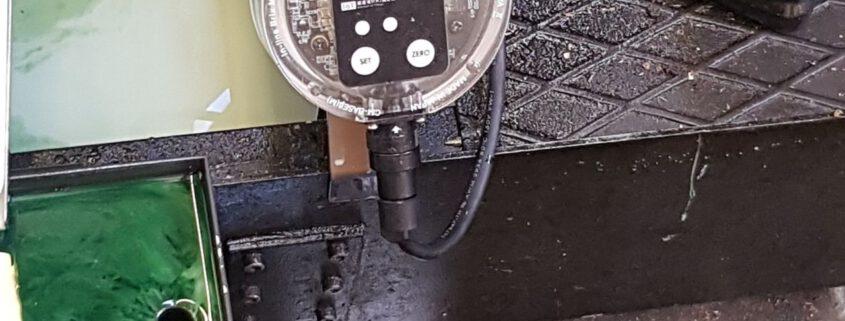
Yesterday, we commissioned several CM Base beta refractometers from ATAGO at a customer’s site. These immersion refractometers will now be used to automatically monitor the oil content of the cooling lubricant in the supply tanks of the machine tools. No feed pump is required, which saves costs and energy and makes installation extremely simple.

The analog 4-20 mA signal output of the CM Base beta allows for straightforward transmission of measurement values to a central control system (PLC) in real time. Thus, this facility has laid the foundation for centrally monitoring cooling lubricant concentrations across its 17 individual tanks and for automating the cooling lubricant replenishment process.

Optimizing Wastewater Monitoring – Paperless and Efficient with LoRaWAN

I often visit customers and find that in many industrial facilities, the automatic recording of measurement data at certain monitoring points is still a challenge. This is particularly true for older existing buildings with inadequate cable infrastructure. The result: Data is often recorded locally using paper chart recorders or data loggers – a cumbersome, time-consuming, and decentralized process.

LoRaWAN can solve such problems. This radio technology enables the wireless transmission of measurement values, such as pH, temperature, or conductivity, from remote or difficult-to-access areas within a facility. LoRaWAN operates with very high energy efficiency. The installed transmitters run on an integrated battery, which allows for several years of operation. The data is stored centrally and is accessible at any time – whether from the control room or on the go.

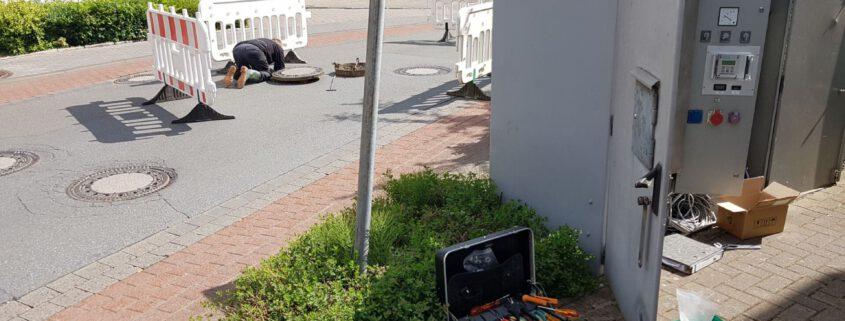
An example: In an outdoor area of an industrial plant: Small transmitters (so-called nodes) can be easily retrofitted to the 4-20 mA signal output, which is often available for online measurements. From there, data is automatically transmitted, even from wastewater manholes, to a gateway placed in a central operations building. Via LAN or LTE, the data then reaches a cloud, where it can be stored securely and without gaps and analyzed – ideal for process optimization, as well as for documentation and proving ongoing compliance with legal requirements.

Overview of the advantages:

  • Centralization: All wastewater data is centralized, providing better overview, faster decision-making, and constant access to data.
  • Time and Cost Savings: No manual data collection is required, eliminating “analog” documentation.
  • Flexibility: Older systems can also be easily retrofitted. Nearly unlimited scalability.
  • Reliability: Large transmission range, even possible through thick walls.

Thus, LoRaWAN enables simple, reliable, and wireless data transmission – the perfect solution for digitizing your wastewater measurement technology. Our team at GIMAT is happy to assist with the selection and supply of hardware, as well as the setup of the complete system.

Customized Wastewater Sampling: Vacuum Technology in Confined Industrial Environments

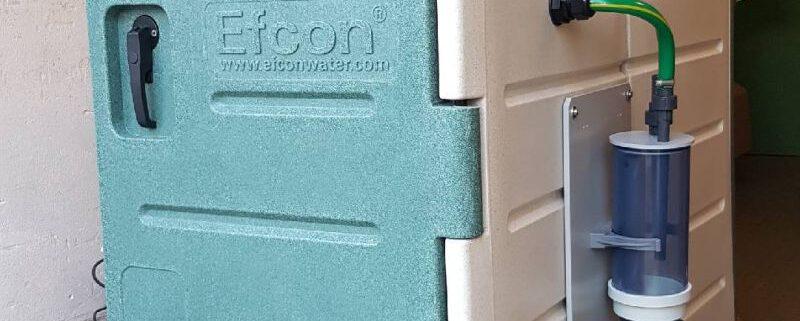
Today at GIMAT, we prepared two wastewater samplers from EFCON® Water b.v. for shipment, which we adapted in-house for a specific customer application.

Our customer, a large-scale food industry company, tasked us with finding a solution to the following problem:

The wastewater flows in existing pressure pipelines located beneath the hall ceiling of one of the technical rooms. The sampling method was required to use the vacuum principle.

These two requirements were initially incompatible. Therefore, a practical and cost-effective solution had to be found, considering the very tight space constraints and the need for the sampling devices to be positioned in the middle of the hall.

Our solution involved the fabrication of constantly overflowed or supply pots, which were attached to the plastic housings of the EFCON samplers and fed with “fresh” wastewater from the overhead pipelines. The wastewater sample can then be drawn by the samplers from these pots.

Soon, we will mount all components on-site at the customer’s facility, lay the supply lines, and connect the overflows from the supply pots via hoses to the floor drains in the hall. With the commissioning and training of the operating personnel, this project will then have been successfully completed.

Installing pH Monitoring for Cooling Lubricant Can Be This Simple

More and more users of cooling lubricant (CL) want the pH value displayed 24/7 in real time. Two questions I am repeatedly asked in this context are: “What about the installation? And what about ease of maintenance?”

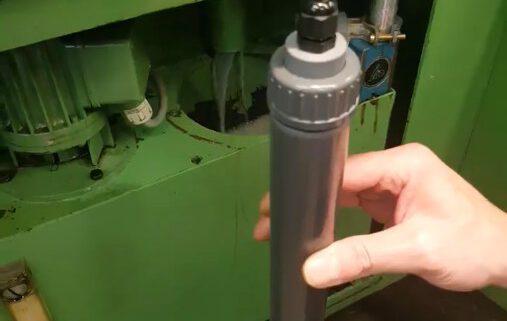
For many years, a proven solution has been: GIMAT offers watertight protective fittings for its pH electrodes. These enable pH electrodes to be installed directly in the CL supply tank. No pump, no piping – this saves costs. The customer video shows how straightforward and uncomplicated the installation of a pH measurement system can be. For his test, our customer used a standard laboratory stand with a magnetic base. The appropriate clamps were, of course, supplied by GIMAT along with the probes.

Thanks to the clip mechanism, the protective fitting with its integrated electrode can be easily removed at any time. This allows for effortless cleaning and calibration of the electrode. Let’s see what the customer has to say about it after the testing phase.

Professional Commissioning of New Measuring Instruments and Samplers Pays Off for Customers

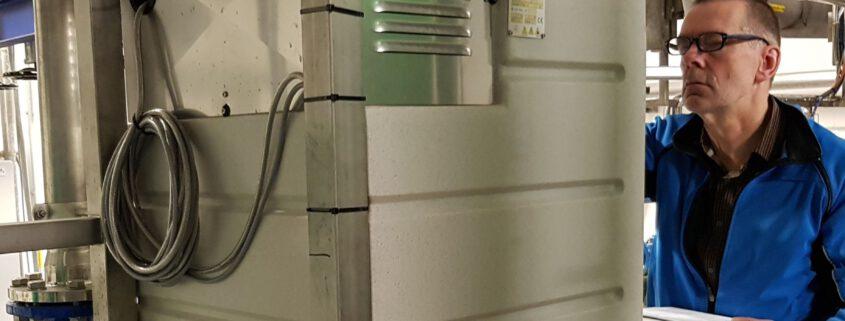
When new measurement and sampling systems for water/wastewater are procured, the staff often lacks the time to thoroughly familiarize themselves with the new equipment. We experienced this again last week when I, together with my colleague Gerhard Solice, commissioned systems from various manufacturers at a wastewater treatment plant and an industrial facility. These included two reliable samplers from EFCON® Water b.v., a flow measurement system from VEGA, and various peripheral devices such as data loggers, all of which we had also supplied.

The knowledge we have gathered from numerous projects and the commissioning of many measuring devices enables us to quickly get to grips with new systems. Within a few hours, we had mounted, installed, and successfully commissioned all components. The on-site personnel were relieved that we saved them the arduous, time-consuming task of researching and studying the operating manuals.

Furthermore, we supported the customers in integrating the signals into their process control systems. This way, we enable our customers not only with professional mounting and installation but also with the optimal utilization of their equipment.

Commissioning of an Inline Refractometer Successfully Completed Within Seconds

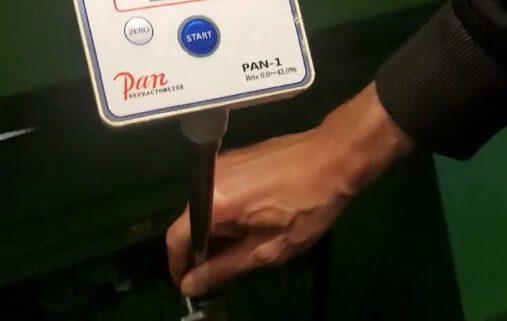
Yesterday, I brought our test device, the ATAGO PAN-1, to a customer’s site. In the future, such an immersion refractometer will be used to automatically monitor the Brix value of the coolant at several machine tools, in order to determine the oil content of the cooling lubricant (CL).

Together, we commissioned the battery-operated refractometer. The zero-point setting (calibration) was performed at the factory prior to delivery; no further adjustment or calibration on-site is necessary. We only had to mount the battery-operated PAN-1 and switch it on. The video shows how quickly and straightforward the mounting and commissioning process was. A few seconds were all it took.

From now on, the customer receives a digital and clearly readable 24/7 display of the current Brix value and temperature of their cooling lubricant (CL).

Would you like to see the PAN-1 “live”? As the ATAGO Service Center Germany, we will be presenting this and other measurement technology on November 20-21 at the VSI (Verband Schmierstoff-Industrie e.V.) Coolant Forum in Fellbach at the FLUIDAS booth. Or contact me directly; I would be happy to present it at your facility: volker.koschay@gimat.de.